A bulk box, also called a pallet box or bulk bin, is a pallet-size plastic container with its own fork-entry base for storing, stacking and shipping loose parts and heavy goods. Top-discharge and bottom-discharge builds empty without tipping, and optional drop doors let a picker reach into a stacked box.
The main operation is forklift handling and block stacking. Set up and out of transit, bulk boxes stack up to six high, with stack height set in the specification. They suit line-side replenishment of heavy parts. Molded box walls are waterproof and unaffected by grease or oil, and take a pressure wash, ready for washdown between loads.
Fasteners, bearings, gaskets and plumbing, HVAC and waterworks products such as pipe fittings, couplings, elbows and valves go in them. Automotive loads are stamped blanks, castings and bumper moldings, with water-jet cut foam under finished surfaces. Rolls, coils and live Christmas trees go in them on a tractor loader. Vented builds suit melons and pumpkins, discharge builds feed a hopper with plastic pellets and regrind, and sporting goods, furniture hardware and cartons of finished medicine suit them.
Warehouse and 3PL receiving and shipping staff use them for overflow, returns and shipment consolidation. They also suit general manufacturing, chemicals, utilities, energy and government. Aerospace suits a foam-lined box for large formed components, and medical and pharmaceutical plants for device components. Integrators and installers place them in end-client plants across automotive, water and fluid handling and shipbuilding.
Sizes run 31.9 to 78 inches on the long side. Load ratings run from 1,000 to 2,500 pounds, published per part number, and the duty grade, light through extra, carries no rating. Walls are injection-molded or structural foam with reinforced ribs and steel reinforced corners and runners, and forks enter from two sides or all four. A box is fixed wall or removable-wall folding.
Collapsible Containers overlap it on folding bulk boxes. Agricultural Containers and Produce Containers cover vented harvest bins. Plastic Pallets suit loads without walls, Pallet Sleeves swap molded walls for folding corrugated plastic, and Wire Containers are steel mesh. Bulk box dollies and covers fit the footprints, and longer lengths, custom colors and cut interiors are custom containers.
 Experienced
 Solution Based
 Made in the USA
 Quality Guaranteed

Showing 1–16 of 86 results
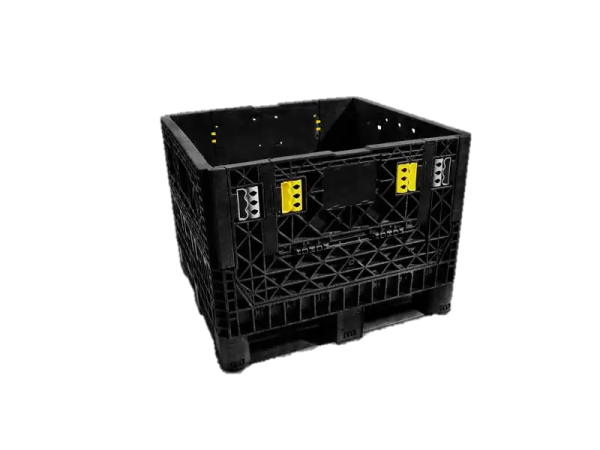
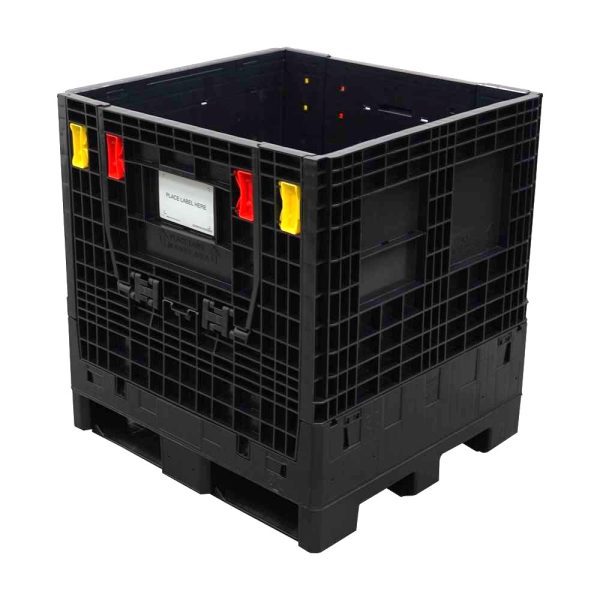
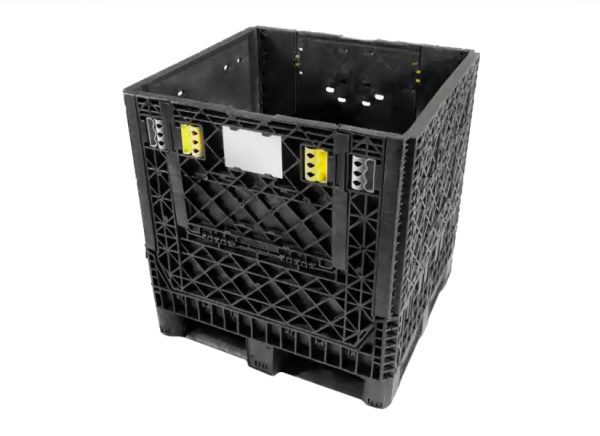
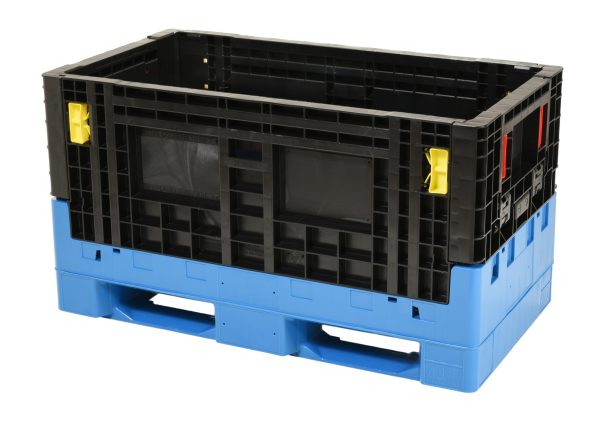


A bulk box is a pallet-size container with its own fork-entry base, used to store, stack and ship loose parts and heavy goods a full pallet load at a time. Buyers also call it a pallet box, bulk bin or skid box. Flexcon’s are injection-molded or structural foam with ribbed walls and run 31.9 to 78 inches on the long side.
Yes. Flexcon bulk boxes sit on an integral base for fork-truck handling, with two-way or four-way entry depending on the build. Four-way entry lets forks come in from any side, so boxes need not face the same way. Two-way entry takes forks from two opposite sides and suits a lane where every box faces the same direction. Name the entry when you specify.
Published load ratings run from 1,000 to 2,500 pounds, and each belongs to a part number, not the whole line. The catalog gives one rating per part number, with no separate static and dynamic figures. A duty grade is a label and states no rating, so tell us the weight, stack height and handling, and we will specify the box.
Set up and out of transit, Flexcon bulk boxes stack up to six high. How high a loaded stack should go depends on the weight in each box and the build, so stack height is written into the specification. OSHA requires containers stored in tiers to be stacked, blocked, interlocked and limited in height so they stay stable.
Yes, with a drop door or a stock picker build. A drop door is an optional door hinged into one wall that drops open, so a picker reaches a box with others stacked on top. A stock picker box is cut down at the front, so the picker reaches straight in while the box stays on its pallet. Doors are specified per order.
Receiving and shipping staff at distribution centers and third party logistics providers use them for overflow, returns and shipment consolidation. Counter, warehouse and inventory staff at plumbing, HVAC and waterworks distributors keep the bigger products in them, and plants use them for line-side supply of heavy parts. Integrators and installers place them in end-client plants across many industries.
A plastic bulk box is the better fit when it makes repeated trips in a loop that returns it, and a cardboard pallet box still suits a shipment that will not return. Life cycle studies of reusable and single-use transport packaging find the result depends on how many trips a container makes and how many come back, and it can reverse when many are lost.
Yes, they can be pressure washed between loads, and molded plastic does not rust or need repainting the way painted steel does. In food plants the boxes suit packaging materials, finished cases and other goods that do not touch the box. Where product will sit against the walls, ask about food-contact use on the part number before ordering, and name the product.
A fixed-wall bulk box keeps its walls up, and a removable-wall folding box knocks down for the empty trip back. Fixed walls suit a box that stays in a plant or turns around on a short loop, and folding builds suit a long return leg where empties would otherwise fill trailer space. How far a box folds differs by item, so ask for the figure.
A plastic bulk box is the reusable version of what many buyers call a gaylord. It does the same job of holding loose parts and heavy goods a pallet load at a time, with its own fork-entry base. If you search for a gaylord, send us the footprint, the entry you need and the weight per box, and we will specify the box.

Connie, Sr. Material Handling Consultant
Talk To Sales Rep Now
